Developments and challenges in cleanroom planning
In recent years, the life sciences industry, and with it the planning of cleanrooms, has undergone significant changes and developments in order to meet technological progress, stricter regulations and higher sustainability requirements. Sustainability considerations have also found their way into cleanroom planning, leading to ever new approaches in terms of material selection, energy efficiency and waste minimization in cleanroom design.
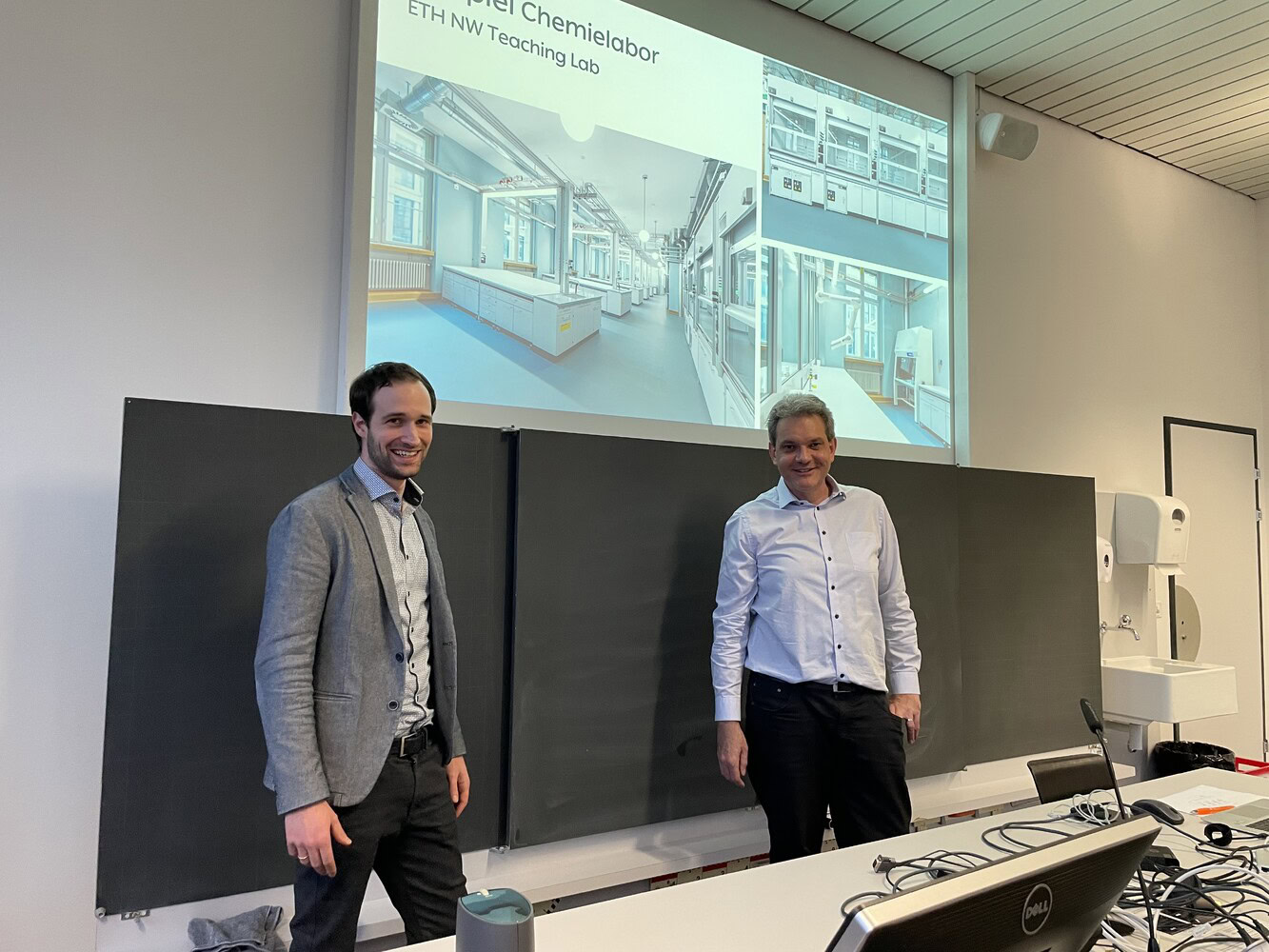
In this expert talk, Andreas Rieben and Silvana Frey discuss the challenges of commissioning cleanrooms, current changes resulting from the revised Annex 1 and their impact on the planning and adaptation of cleanrooms.
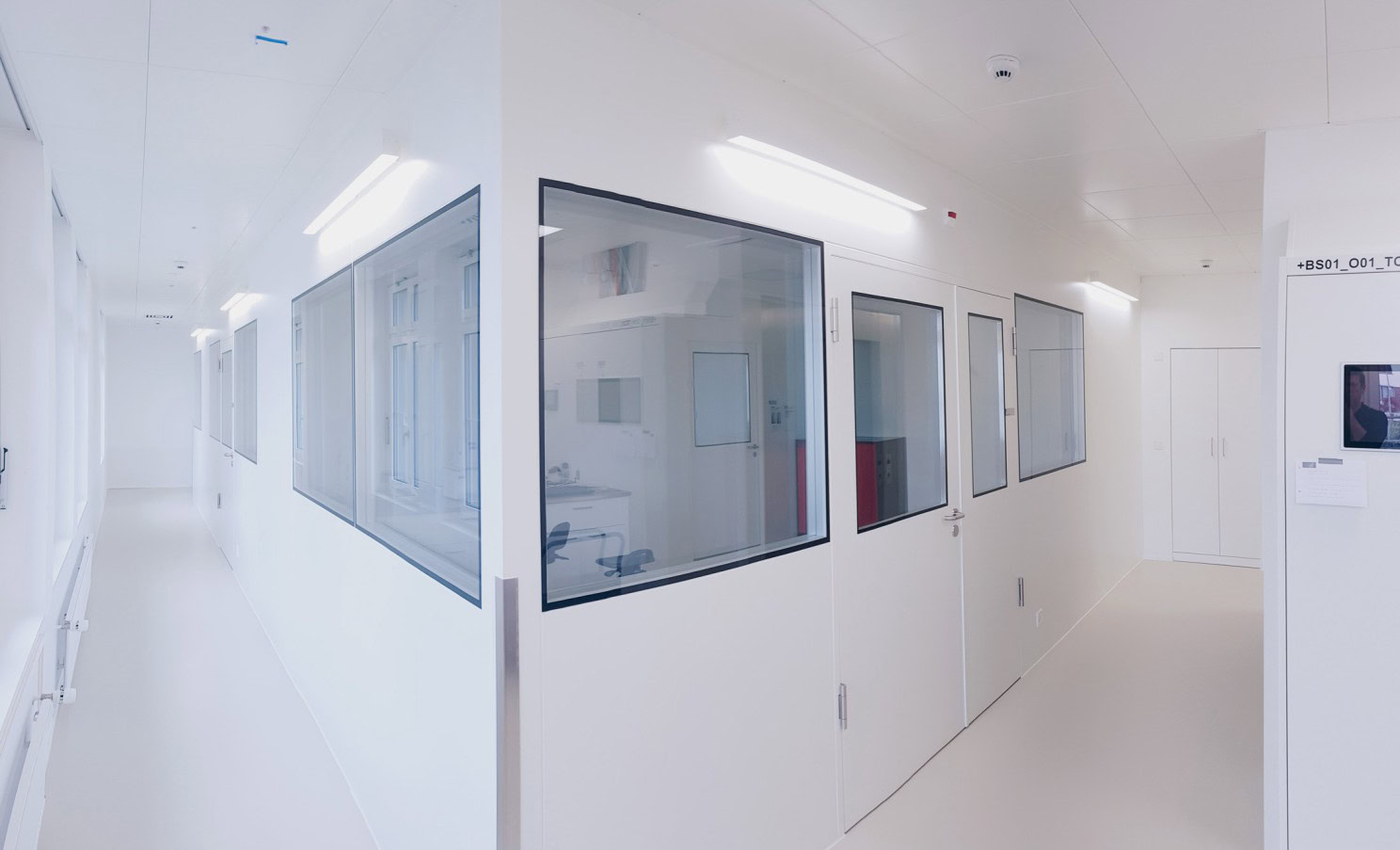
There are very individual challenges, depending on the processes that take place in the cleanrooms. I am currently commissioning a production cleanroom. Here, the zone transitions and airlocks are equipped with changing rooms designed for the use of disposable clothing. Full protective suits with breathing air supply are also used. Changing clothes is correspondingly time-consuming and this must be taken into account when designing the airlocks.
In another project, however, a cascade of locks is planned. Reusable clothing is used here, also for ecological reasons. Here, the focus is more on the changing processes that are required with each zone transition. The airlocks must be practical so that changing into and out of zone-specific clothing is as comfortable, quick and hygienic as possible. Added to this are the requirements for disinfecting staff and materials. Where do I position soap and disinfectant dispensers, where do I take a last look in the mirror to check that the hair and beard net are correctly positioned before entering the cleanroom? The design and connection of washbasins also play a role - can I use drinking water, does the washbasin need sterile water? And in most cases, limited space also plays a role. You have to get creative and, for example, route an exhaust air duct through an overbench.
In recent years, the life sciences industry, and with it the planning of cleanrooms, has undergone significant changes and developments in order to meet technological progress, stricter regulations and higher sustainability requirements. Sustainability considerations have also found their way into cleanroom planning, leading to ever new approaches in terms of material selection, energy efficiency and waste minimization in cleanroom design.
It's always about understanding what the user wants. Above all, the users who are in the space and work in it every day, and not just those who manage the building or the operation. There can also be a discrepancy. Finding a good balance here is the biggest challenge.
Swissmedic is now setting higher requirements, even for existing cleanrooms. This becomes clearer with the following example: For example, we have a checkroom, i.e. an E zone that is not a cleanroom zone, and a personnel airlock from E to C. According to Annex 1, this direct transition from the personnel airlock is no longer possible. An additional zone transition is therefore required. What could be the solution here?
As there is no additional space, we have to install a small air circulation system in the existing checkroom. The additional zone transition means that all subsequent zones (from C to AB) are operated at a higher pressure level. The pressurization requires more fresh air. The result is therefore not a conversion of this checkroom, but the involvement of all subsequent cleanrooms. This is a challenge because the systems all have to be re-qualified at the higher pressure level.
Not serious. If we have fairly airtight rooms, this increase in pressure does not play a major role. It doesn't need that much more fresh air and therefore doesn't require much more energy.
The way I see it, we are talking about aseptic filling, i.e. filling sterile product. From a GMP perspective, the new Annex 1 of the EU GMP Directive applies. This stipulates quite precisely which cleanroom classes and zones are to be used for which purpose. In my opinion, the new challenges posed by Swissmedic's inspections are due to the application of the new Annex 1 of the EU directive. Sterile products that are administered parenterally to patients naturally require a higher level of protection against contamination than, for example, tablets or capsules that are administered orally. There are no specific zone specifications for these in the EU GMP Directive. However, Annex 1 applies to sterile production, which specifies many requirements for contamination control, pressure levels, applicable cleanliness classes and zones, airlocks, etc. There are various requirements that are newly described and leave less leeway, and it is of course always critical to meet new requirements from the authorities.
In principle, yes. There was still room for maneuver before. Now Annex 1 is much more detailed than before and the authorities use it as a guide during inspections and assess the exact implementation of the new requirements on site. According to Annex 1, however, there is also the possibility that an alternative concept can be accepted if the contamination control is demonstrably fulfilled. This is of course very individual and rather difficult to justify to the authority in individual cases, or is at the discretion of the inspector. Therefore, in case of doubt, I would recommend applying the concepts described in Annex 1.
The requirement for a contamination control strategy in general is also a significant change to the new Annex 1. This is a new requirement. The aim is to assess the contamination risk of the various sources of contamination and their interaction across the board and to apply an overall concept for contamination control in order to minimize the risk of contamination. Ultimately, the aim is to protect sterile medicinal products and therefore the patient from contamination of any kind.
Speaker
After graduating as an HVAC engineer in Lucerne / Horw, Andreas Rieben started his career at Sulzer Energie Consulting. His move to Willers in 2000 was the reason for the establishment of our location in Bern and for the HVAC division. Andreas has been a member of the Executive Board since 2004 and CTO since July 2025.
After graduating with a degree in pharmaceutical engineering, Silvana Frey worked for various pharmaceutical companies (e.g. Pfizer, Novartis, Roche) and engineering firms in the GMP environment, from validation/qualification to GMP auditor, quality manager, GMP consulting, project management in the quality assurance environment and overall responsibility for the quality of medicinal products. Her expertise lies in the area of regulatory requirements. As a freelancer, Silvana Frey supports Willers in projects in the field of quality management and assurance as well as validation/qualification.