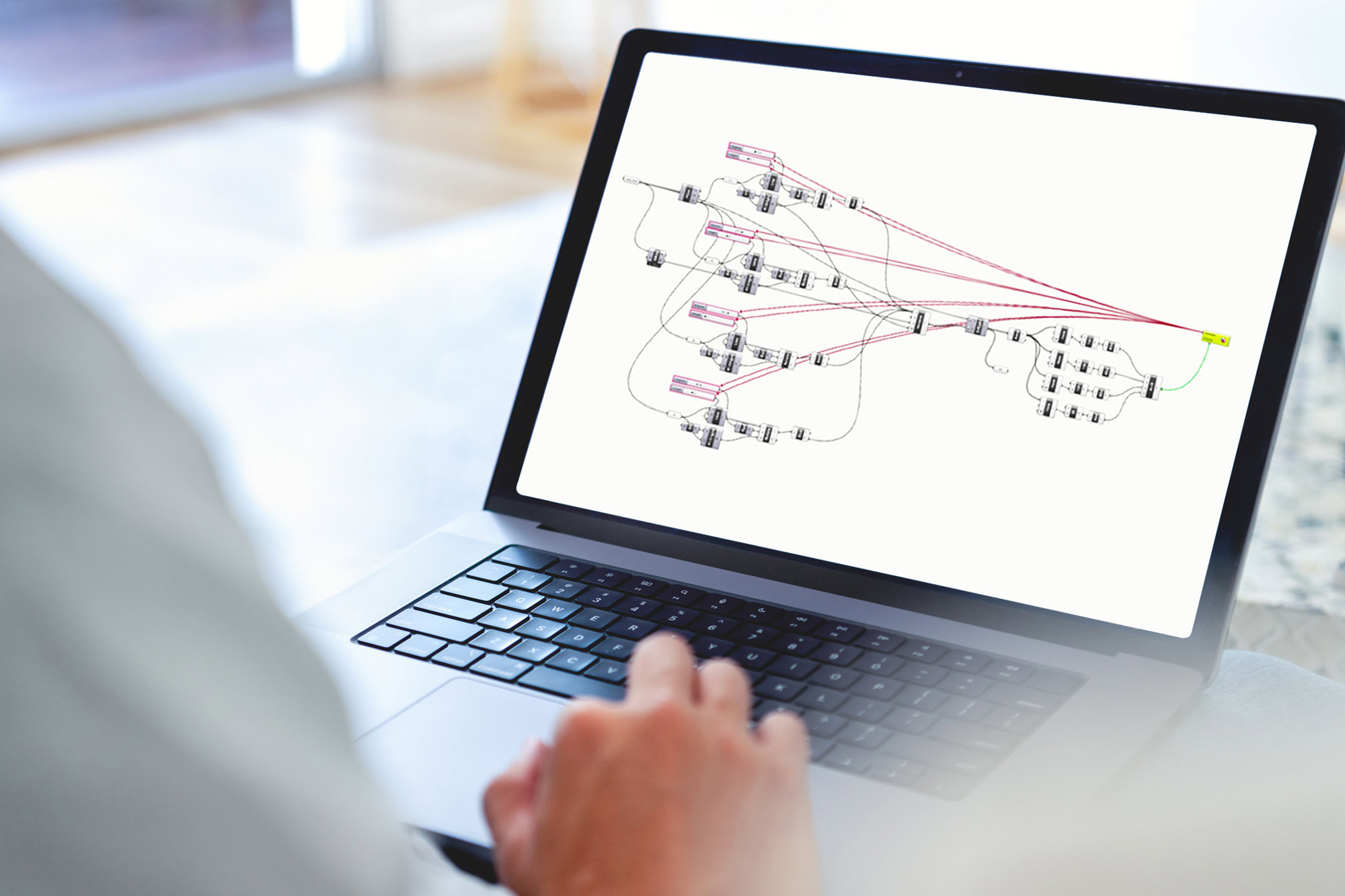
Can we build an algorithm that combines design and performance?
Intelligent design and planning systems
The way in which buildings are planned is currently undergoing a fundamental change. Whereas architecture and building technology used to work in separate, linear processes - first the design, then the technical testing - today the requirements for energy efficiency, comfort, sustainability and operational complexity are constantly increasing. This classic process often leads to conflicts of objectives that are recognized late, long iteration loops and unnecessary adjustments. With digitalization and the increasing spread of BIM, it is also becoming clear that this planning approach no longer meets the challenges of today and tomorrow.
We are convinced that a new form of collaboration is needed. That is why we are researching methods that seamlessly combine design, simulation and technical performance. Our aim is to develop systems that make visible in real time how architectural decisions influence energy consumption, daylight, comfort, system technology or the structural context and how technical parameters in turn shape design options. This creates an integrated understanding that strengthens both the creative potential and the technical quality of a building.
When performance becomes part of the design
This approach represents a clear paradigm shift: away from isolated tools and downstream inspection processes and towards planning in which intelligent algorithms provide guidance from the outset. Instead of only evaluating a building at the end, its performance becomes visible at the design stage. Variants do not arise by chance, but from a conscious interplay of location, climate, use, architecture and building technology.
We see enormous potential in this, not only for complex construction projects, but for the entire industry. If design parameters, technical requirements and environmental data are linked at an early stage, conflicting objectives can be identified earlier, synergies can be used more efficiently and decisions can be made on a more informed basis. The planning process becomes more transparent, faster and at the same time more precise.
Simulation as an integral part of the design
Our analysis shows that intelligent optimization and simulation methods do not replace the planning process, but enhance it. They create a space in which creativity is supported by direct feedback, technical quality is considered from the outset and the development of energy-efficient, comfortable and sustainable buildings is facilitated.
The result is a new way of thinking: an integrated, data-based and at the same time creatively open approach that does not separate architecture and technology, but merges them.