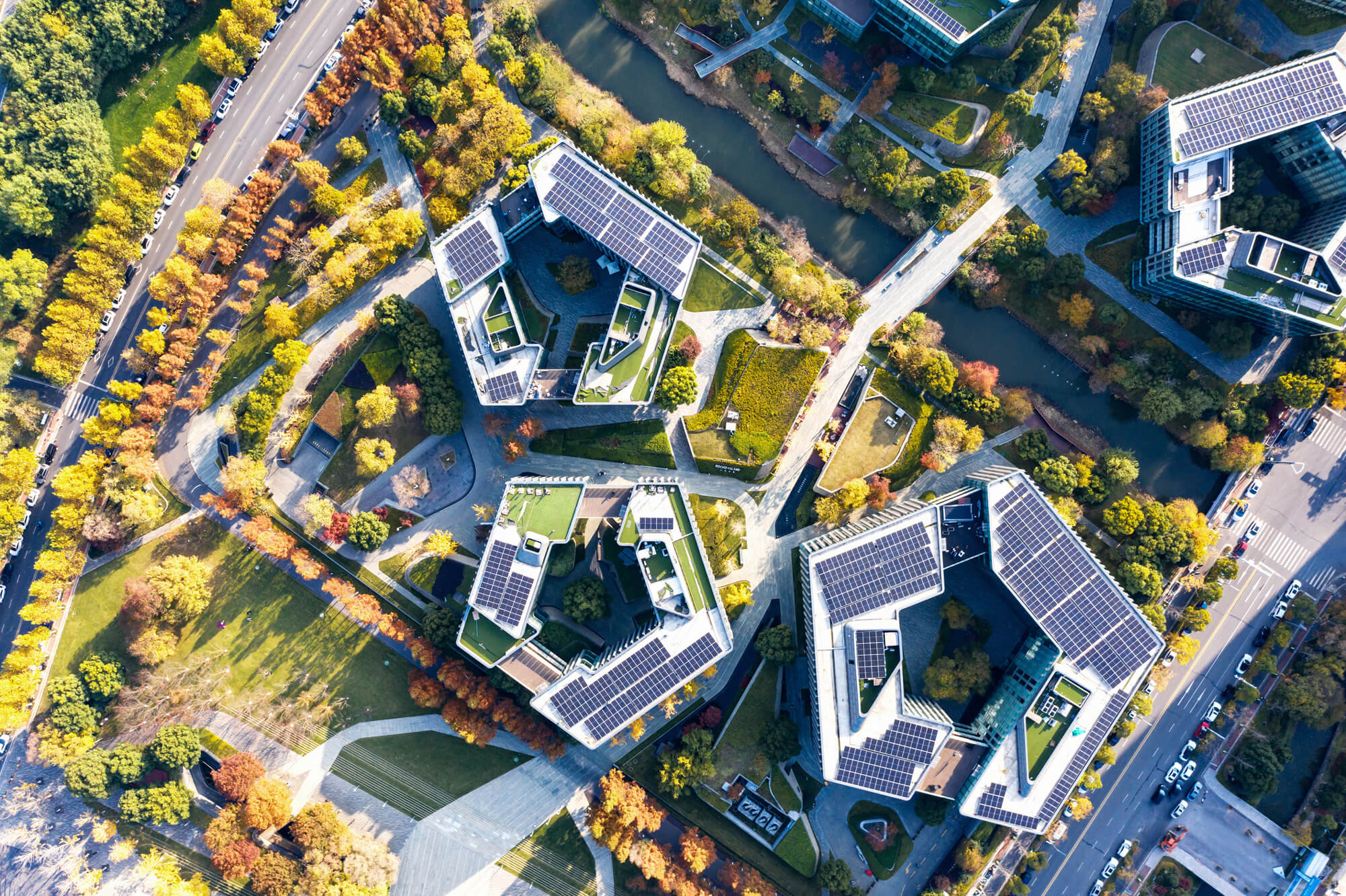
As a key lever for decarbonizing energy systems, thermal networks make a decisive contribution to making cities more liveable and climate-friendly.
Decarbonization and security of supply
Thermal networks enable the systematic integration of renewable energy sources such as waste heat, groundwater or environmental heat and sustainably reduce dependence on fossil fuels.
For cities and regions, they are more than just a technical system: they form a strategic infrastructure for achieving municipal climate targets, increase the resilience of the energy supply and create long-term security of supply.
Flexible infrastructure for growing cities
Thermal grids are scalable and modularly expandable. They can be adapted to new districts, changed load profiles or additional energy sources - without destabilizing the overall structure.
In combination with heat pumps, storage systems and intelligent control, integrated energy systems are created that combine operational reliability, cost-effectiveness and long-term development capability.
From the concept idea to implementation
Thermal grids are not an individual measure, but part of an integrated energy and spatial strategy. We support cities, energy suppliers and infrastructure managers from the initial analysis of potential to strategic design and structured project implementation.